
Here is the list of the best Video calling and Web conferencing tools for group video calls and chats. It includes secure & feature-rich apps.
Best Video calling and Web conferencing tools
Be aware that these are alternatives, and they may or may not have all the features available in Zoom.
- Microsoft Teams
- Google Meet
- Zoho Meeting
- Zoom
- Signal
- WhatsApp Video Call
- FaceTime.
Let us take a look at them.
In this list, while Signal is the most secure app for making a video call, it is also the most limited in terms of features. On the other hand, Microsoft Teams offers comprehensive features and security, along with video calling.
1] Microsoft Teams

If you are looking for a reliable alternative to Zoom, Microsoft Teams is what you should be looking at. As I said, it’s only for those who are serious. Microsoft offers this as part of its Office 365 but has recently opened it for Family members as well. The catch is that it is free for one whole year from the day you sign up.
- Built-in audio and video calling for individuals, groups, and full team meetups.
- Free for up to 300 people
- Unlimited chat messages and search.
- 10 GB of team file storage plus an additional 2 GB per person for personal storage
To make a video call, select the channel and team, then click the Meet Now video button to start the call.
2] Google Meet

Google Meet is a good service like WhatsApp and FaceTime. When it comes to encryption, it doesn’t offer end-to-end encryption, it’s great for video calls for up to 250 people in one go. And if you only plan to stream, you can reach thousands of people in one go.
3] Zoho Meeting
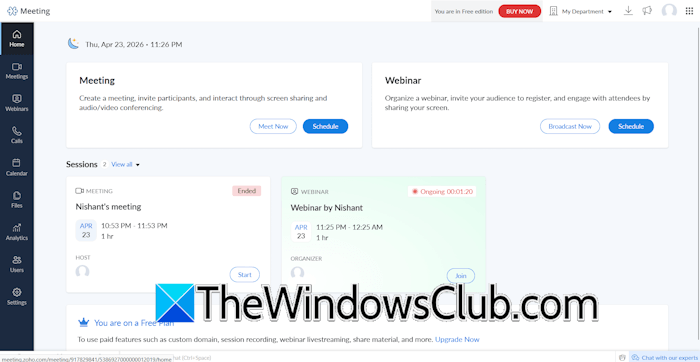
Zoho Meeting is a free, secure online meeting platform for connecting, collaborating, and working remotely. It provides Webinar Analytics and offers Call Integration.
4] Zoom
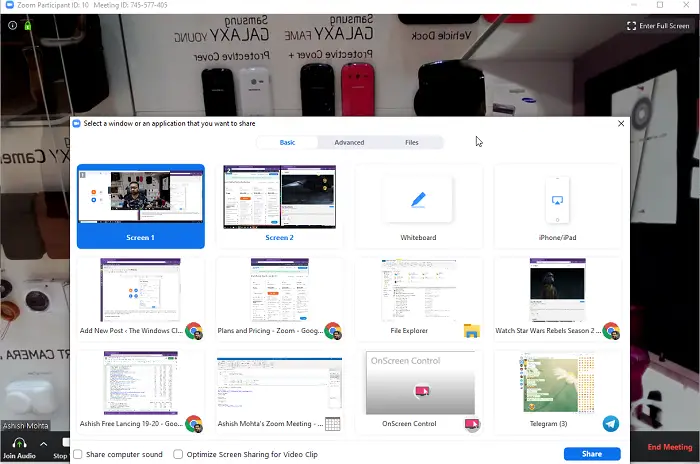
Zoom has seen an unprecedented increase in usage across all sorts of meetings. Businesses, Schools, family meetups, you name it, and it’s happening on Zoom.
5] Signal

One of the most secure messaging apps, Signal, is popular among the community, which genuinely cares about privacy and security. It is similar to Telegram and WhatsApp, but a lot secure. Signal offers a video calling feature that is secure using its open-source Signal Protocol. However, there is no group video call and is best used for one-to-one video calling.
To make a video call, open the contact, and then tap on the video icon to start the call. You can choose to disable audio and video and enable them later. The only drawback of this app is that there is no group video calling available.
6] WhatsApp Video Call
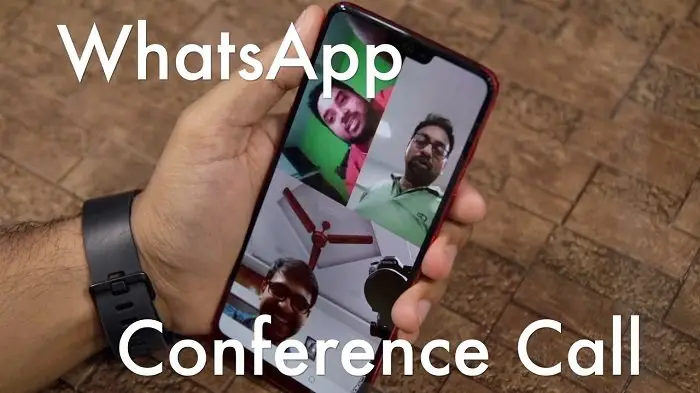
If you are looking for a casual video call for up to four people, then WhatsApp is a great choice. To place a group video call, start a video call with one participant, then tap the “Add Participant” button in the top-right corner and invite the contact from the list. (maximum of four). If WhatsApp is accessible in your group or country, then you should use it.
7] FaceTime

If you own an iPhone, you already know about it. Apple offers this to all its devices and is among the most secure apps for video. You can add up to 32 people to a video chat, and it offers end-to-end encryption. The best way to start a group FaceTime call is to ask everyone to join a group chat, tap the group of contacts you’re talking to at the top of the screen, then tap the FaceTime icon. It will add everyone in the group chat to the video call. The same feature is also available on macOS, so it doesn’t always have to be your phone.
If you are looking for casual video calling with your friends, it is best to use apps like FaceTime and WhatsApp. If you need only to hold meetings with a small group, Skype is the way to go. Lastly, if you need to manage big groups with chat, Microsoft Teams works best for that scenario.
What are your recommendations?
Which are the best Video calling and Web conferencing tools?
The best video calling and web conferencing tools include Microsoft Teams, Google Meet, Zoho Meeting, Zoom, Cisco Webex, RingCentral, Slack, Dialpad, ClickMeeting, GoToMeeting, WhatsApp, FaceTime and Jitsi. These platforms stand out for reliability, integrations, ease of use, and scalability.
