
If you see a Stop Error after applying Windows Updates on your Windows 11/10 system, know that it is the result of the boot state that the system gets. Microsoft has outlined steps to help you address this issue. Let us take a look at them.
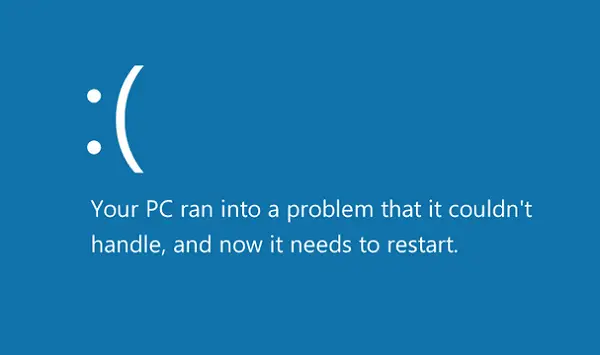
Even when Windows recovers from the problem, you still get a prompt that says Windows has recovered from an unexpected shutdown or Your PC ran into a problem that it couldn’t handle and now it needs to restart, and this problem can happen on any version of Windows.
Blue Screen after Windows Update in Windows 11
If you see a Stop Error or a Blue Screen after a Windows Update in Windows 11/10, follow these suggestions to resolve the issue.
- Perform System Restore
- Use Command Prompt to uninstall the problematic update
- Run Startup Repair
- Run System File Checker
- Reset Windows.
It is likely that your PC may have gone into a Boot loop. Now since you cannot boot to the desktop in normal mode, you will have to boot into Safe Mode to carry out these suggestions.
If you cannot enter Safe Mode, then try to access and use Advanced Startup options to carry out these suggestions.
If you cannot do both, you may have to boot into Windows with your Windows Installation Media or Recovery Drive and select Repair your computer to enter Troubleshoot > Advanced Startup Options > Command Prompt. You can now use CMD to run some required commands.
1] Perform System Restore
Once in Safe Mode, run System Restore as usual.
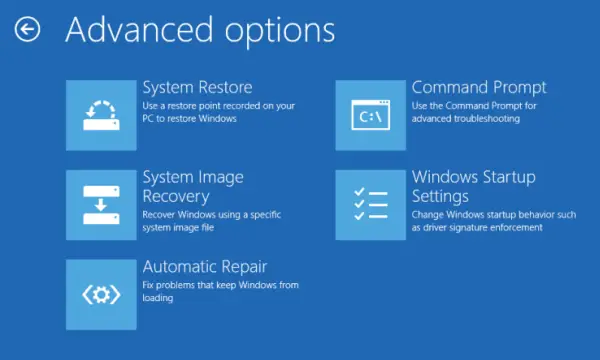
If you have accessed the Advanced Startup Options screen, go to Troubleshoot > Advanced options and run System Restore.
This will restore your computer to a prior good point.
2] Use Command Prompt to uninstall the problematic update
In Safe Mode or the Advanced Startup options screen, open Command Prompt and execute the following commands:
wmic qfe list brief /format:table
This will list the recent Windows Updates.
Note down the KB number of the recent Windows Update that you want to remove.
Now run the following command:
wusa /uninstall /kb1234567
Here, replace kb1234567 with your number.
This will uninstall the problematic update.
Restart your PC and see if it boots normally.
3] Run Startup Repair
From the Advanced options screen, you should run the Automatic Startup Repair and see if that helps.
4] Run System File Checker
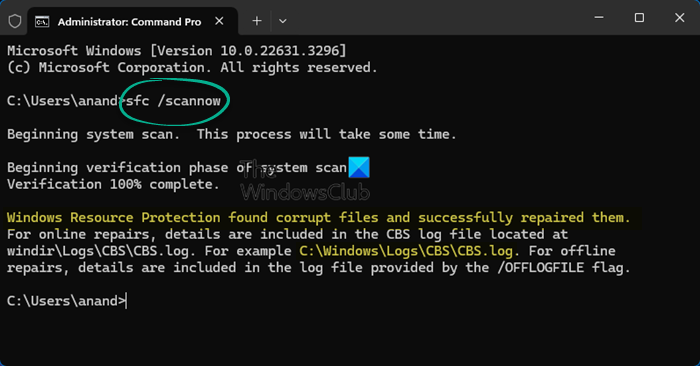
Use the Command Prompt here to run the System File Checker scan to repair potentially corrupted system files.
sfc /scannow
Read: INACCESSIBLE_BOOT_DEVICE (0x7B) Stop Error.
5] Reset Windows
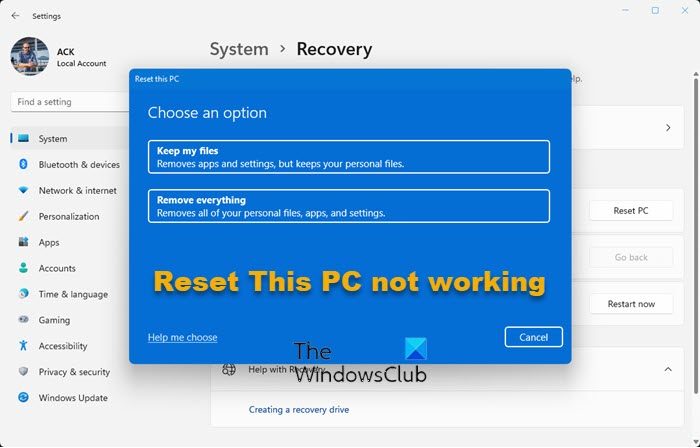
If nothis helps, you will have to do one of the following:
- Reset PC via Settings
- Reset Windows 11 using Advanced Startup Options when PC won’t boot
- Reset Windows 11 without using the Settings app.
Make sure to choose the Keep my files option to save your files and data during the Reset process.
All the best.
Can a new Windows Update cause BSOD?
Yes, a new Windows Update can cause a Blue Screen of Death (BSOD) error. This can happen if the update contains bugs or conflicts with other software or drivers on the system. It is always a good idea to back up your important files before installing any updates in case of a problem. You can also check the Microsoft Forums and seek peer feedback to see if anyone has reported any major issues after recent Windows updates.
