
The OpenClaw ecosystem has rapidly become one of the fastest-growing open-source agent frameworks. If you have been looking into OpenClaw, you’ve probably noticed many related projects built by both OpenClaw and the community. But which of these projects are worth looking into? To help, we have curated some of the top OpenClaw GitHub repositories and community projects based on GitHub stars.
Top 5 OpenClaw GitHub Repositories & Community Projects
Here is the list of the top five OpenClaw repositories as of the time of writing. When you try them, check the issues list, which is usually available on GitHub.
- screenpipe
- memU
- moltworker
- Manifest
- Archestra
1] screenpipe — 18.9K+ Stars
- GitHub: screenpipe/screenpipe
- Stars: 18.9K+
- Category: AI memory and context
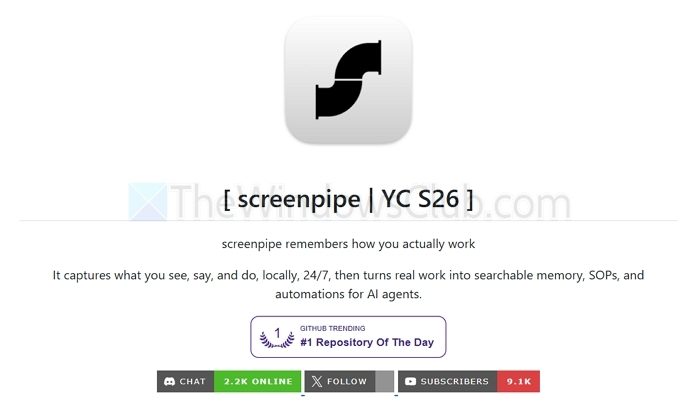
Screenpipe is an open-source system that gives AI agents access to a user’s digital activity. This AI agent continuously captures information such as screen activity and audio, processes it locally, and makes the resulting data searchable. The project describes itself as a way to give AI systems a persistent understanding of what a user has seen, heard, and done on their computer.
As a result, instead of relying only on the current conversation, an agent can use ScreenPipe for additional context. The project uses local storage and provides APIs and MCP-based access for AI agents. Its architecture includes screen capture, OCR, audio transcription, local SQLite storage, search, and an extensible “Pipes” system for agent workflows.
2] memU — 13K+ Stars

- GitHub: NevaMind-AI/memU
- Stars: 13K+
- Category: Agent memory
memU is a memory system designed specifically for proactive, continuously running AI agents. Memory is particularly important for OpenClaw because the platform is designed to operate as a persistent personal assistant rather than as a conventional chatbot. memU focuses on helping agents retain useful information across sessions and interactions. GitHub’s topic listing explicitly describes it as a “Memory for 24/7 proactive agents like OpenClaw.”
The project is built on the idea that an agent should accumulate and retrieve useful information over time instead of starting from scratch each time a new session begins.
This makes memU relevant to use cases such as personal assistants, long-running autonomous agents, project management, and workflows where an AI needs to remember previous interactions.
3] moltworker — 7.9K+ Stars
- GitHub: cloudflare/moltworker
- Stars: 7.9K+
- Category: Deployment and infrastructure
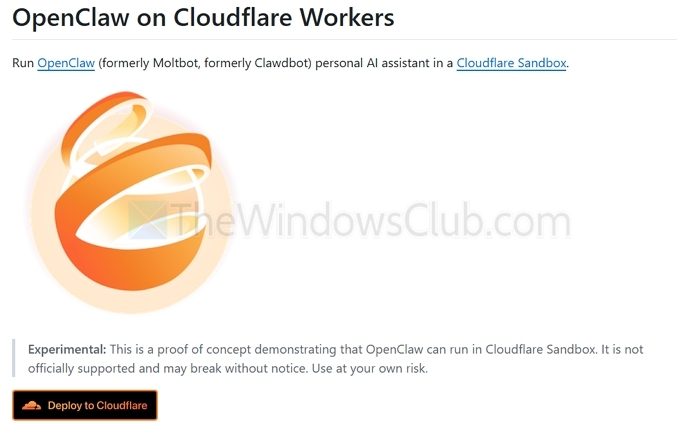
Moltworker is maintained under Cloudflare’s GitHub organization, and it provides a way to run OpenClaw on Cloudflare Workers. This can help because deploying AI agents often involves managing servers, networking, processes, updates, and security. A cloud-based deployment approach can reduce some of that infrastructure burden and make OpenClaw easier to operate remotely.
The project includes deployment files, Cloudflare-specific skills, configuration, tests, and scripts for starting OpenClaw.
4] Manifest — 7.3K+ Stars
- GitHub: mnfst/manifest
- Stars: 7.3K+
- Category: AI infrastructure and observability
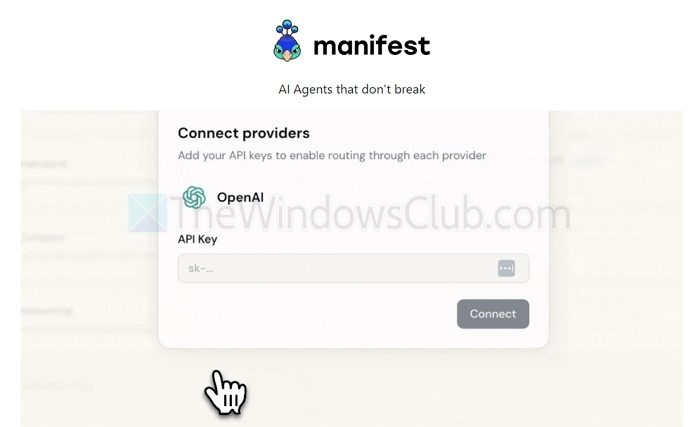
Manifest focuses on a key problem: managing AI models, providers, costs, and agent infrastructure. The project describes itself as a way to connect agents and agent harnesses with different AI providers.
Its GitHub topics specifically include OpenClaw, token tracking, cost tracking, LLM observability, and LLM routing.
This is particularly useful as AI agents become more complex. A single OpenClaw setup may use different models depending on the task, and model usage can quickly become difficult to track.
Read: OpenClaw not running on Windows PC.
5] Archestra — 4.1K+ Stars
- GitHub: archestra-ai/archestra
- Stars: 4.1K+
- Category: Enterprise AI infrastructure and security
As OpenClaw moves into more serious and potentially enterprise-oriented use cases, security, access control, observability, and governance become increasingly important.
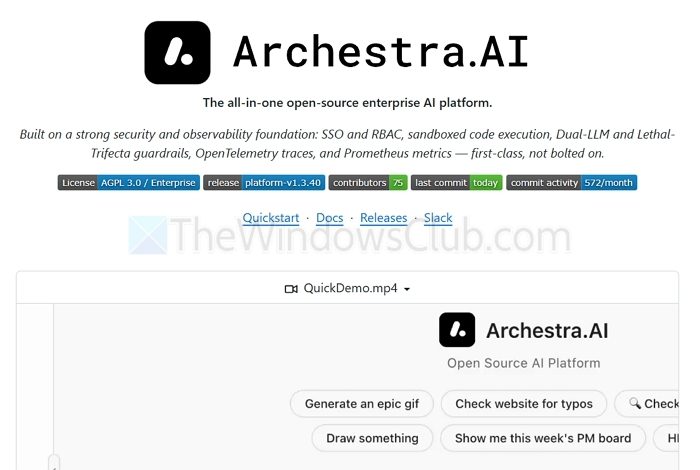
Archestra is an enterprise AI platform that provides guardrails, an MCP registry, an MCP gateway, orchestration, identity and access management, RBAC, secrets management, observability, and cost tracking.
The project specifically references OpenClaw as one of the agent platforms that can be brought into its enterprise environment. This makes it particularly relevant for organizations that want to use OpenClaw while adding additional layers of governance and infrastructure.
So, those were some of the top OpenClaw GitHub repositories and community projects. Apart from this, you should also check clawhub.ai, where you will be able to discover skills and plugins from top creators that could be useful for your needs.
Read: How to secure OpenClaw desktop AI automation on Windows systems.
