
Wi-Fi or Whole-Home Wi-Fi system (Mesh); Which one is better? If you have this question, we’ll help with simple explanations and key points. No doubt we all need a strong WiFi connection to get work done. When setting up Wi-Fi at home, it is important to decide which connection to choose: a traditional router or a mesh Wi-Fi system. The Mesh WiFi system might be new to some of us, and it has its share of pros compared with the conventional WiFi system, but that doesn’t mean it is better in every way. This article will explain both WiFi systems in detail and help you decide which one is better for you.
Wi-Fi vs. Whole-Home Wi-Fi System (Mesh)
This question Wi-Fi or Whole Home WiFi system; which one is better depends upon a lot of factors. Let’s try to understand them in detail. Before that, let’s look at what a traditional (conventional) WiFi system and a Whole-Home WiFi system are.
What is a Traditional Wi-Fi System?
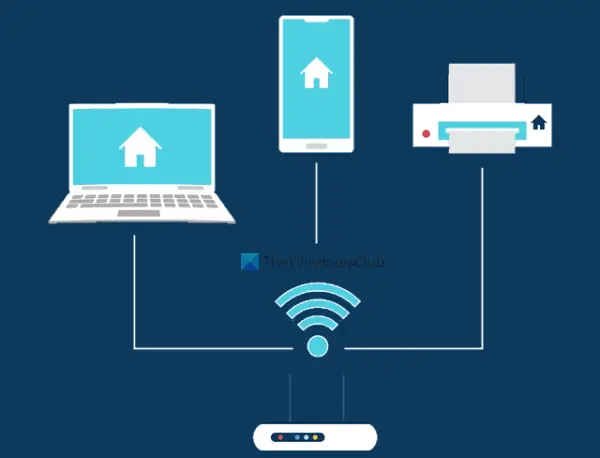
A traditional WiFi system includes a router which is a device that distributes the Wi-Fi signals coming from a modem among all the devices in a home network.
A modem connects directly to the internet (World Wide Web) through an IP address. Because it can only forward this IP address, it can’t handle multiple devices. A router takes this single IP address and creates a private pool of addresses, allowing multiple devices on a home network to connect to the internet at the same time.
The system works well, but the most common issue with this WiFi system is dead zones. A dead zone is any area where the signal drops to zero or weakens. Dead zones typically appear due to physical barriers in the house (like walls, metallic barriers, etc.) or range issues of the WiFi system.
What is a Mesh WiFi System?
Mesh WiFi, also known as the Whole Home Wi-Fi system, includes a series of devices that creates a seamless Wi-Fi network across a home or an establishment. These devices are called nodes. The main node plugs into the modem, just like the traditional router. The other nodes pick Wi-Fi signals and distribute them over the area where they are placed.
Each node replicates the router’s function and dramatically expands Wi-Fi range without compromising signal strength.
Related: WiFi Extender vs WiFi Repeater – Which one is better?
Now, let’s look at the key factors for traditional WiFi and Mesh WiFi systems. These are as follows:
1] Wi-Fi Coverage
Traditional routers provide optimum coverage in smaller homes, such as flats or apartments. They offer strong signals in nearby areas, but as the device moves farther from the router, the signal starts to weaken.
You can increase the range of a traditional network with a device called a Wi-Fi extender. However, an extender is just an addition to the router. It makes sure that you stay connected to the internet, but may not be able to give you a consistent signal.
On the other hand, in a Mesh WiFi system, you can strategically place nodes where you need a strong Wi-Fi connection. Each node works like an individual router, ensuring strong, even coverage throughout the home or workplace.
Also, unlike conventional routers, Mesh Wi-Fi signals can pass through walls and other electronics, eliminating most dead zones in your home. You can reposition or expand the setup as needed by purchasing additional nodes.
Read: How to set up WiFi Range Extender, Booster, and Repeater.
2] Network Connection
Each Wi-Fi extender creates its own network in the traditional WiFi system. So, you have to manually switch between networks to get better internet coverage in different areas of your home. Also, you need to remember multiple network names and passwords in case of a traditional Wi-Fi setup.
The Mesh system uses a single name and password for the entire network. So, you get the freedom to stay connected to the stronger signal as you roam around within that network.
3] Cost
The cost of installing a Mesh WiFi system is higher than the traditional WiFi system, making it a less affordable option for many users. It might be very hard to find a basic Mesh system with 2 nodes below $200. And, as you install additional nodes, the total cost increases per node. Each node may cost around $100 to $200.
Traditional routers, on the other hand, range from $80 to $250. And, their Wi-Fi extenders cost somewhere between $50 to $80.
4] Set Up Process
Whole Home WiFi systems are generally easier to set up than traditional Wi-Fi systems. You don’t have to configure each node to connect to the router.
Range extenders, on the other hand, need to be set up and configured to work with the router.
Advantages of Traditional Wi-Fi
- Budget-friendly
- Simple network extending solution
- Better Ethernet support.
Advantages of Mesh System
- Better whole home Wi-Fi coverage
- Uninterrupted Wi-Fi access
- App-assisted installation
- Easy management
- Reliability (the nodes are interconnected, so data can automatically be routed through a different path if there’s a glitch in the signal)
- Easy to add or remove node (one click virtual process)
- Aesthetic look and design
- Additional features such as parental control and cybersecurity.
Should I get a Wi-Fi Extender or a Whole Home Wi-Fi System?
So, now let’s see which WiFi system would be the best for you. Before making this important decision, it’s best to check on your specific requirements. If you live in a small space such as a studio apartment or single-story building, a traditional router will work for you. In fact, if your current WiFi system meets all your needs and is within your budget, you don’t need to consider alternatives. But, if you live in a larger space where you need to extend the Wi-Fi coverage across multiple rooms or floors, a mesh system would be the best option for you. Of course, the total cost and other factors also matter.
Hope this helps.
What is the difference between Wi-Fi and Mesh Wi-Fi?
A traditional WiFi router distributes WiFi signals across a home network from a single Wi-Fi access point. In this arrangement, the signal has to travel the entire distance between the router and the device which sometimes creates trouble with the WiFi connection. It is a bit similar to using a single speaker to listen to the audio in different rooms of your home.
Mesh Wi-Fi uses 2 or more Wi-Fi access points to create a network of Wi-Fi. In this arrangement, the signal travels from the router to the device through different nodes connected to each other. Each node increases the range of Wi-Fi for the devices in a home network. Think of it as using a separate speaker in each room of your home to listen to the audio clearly.
Is Mesh network better than Wi-Fi?
In terms of reliability, wireless coverage, and speed, a Mesh network is better than a conventional WiFi system in some cases. Mesh networks also offer easier customization and scalability than traditional WiFi systems. But, if you have a single-story apartment and the number of devices is too limited, then a conventional Wi-Fi system would be more than sufficient for you, plus it is budget-friendly.
Read next: Wi-Fi Extenders vs Powerline Adapters: Which is better for your home?
