
Imagine a situation where you boot your computer, but the operating system doesn’t load; instead, you get the “CPU Over Temperature Error, Press F1 to run setup” error. In this situation, you can’t boot into the system in any mode, and your troubleshooting options are limited.
This error can occur on various computers, although the wording may be different on different brands:
- ASUS: CPU Over Voltage Error
- Dell, HP, & Lenovo: Show error codes or messages like Alert! Previous shutdown due to thermal event or CPU Fan Error.
- ASRock: CPU Thermal Throttling or System halted due to thermal issue
- MSI and Gigabyte: They flash a brief message stating that the system shut down due to a thermal event, and then trigger an immediate automatic shutdown without a warning screen.
CPU Over Temperature Error, Press F1 to run setup
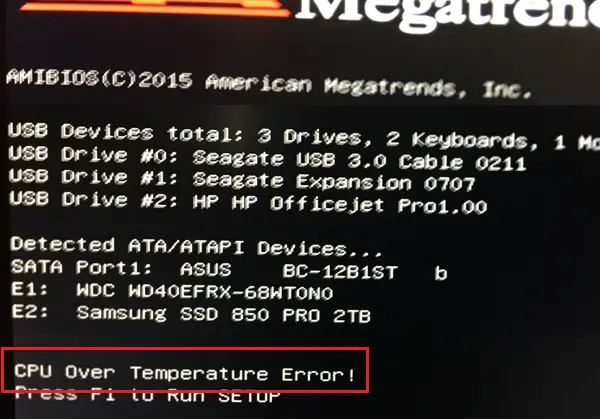
Whether to panic or not over this issue depends on whether it happened after long and intensive usage or after little or no usage. Unfortunately, there’s little you would be able to do since the system doesn’t allow you to log in.
When not to panic over overheating
If you have been playing games on a computer with an average configuration, such an error is normal. Even more, if you have been running memory-intensive programs on your system and it shut down or restarted after a BSOD error, the error code upon rebooting is understandable.
In such a situation, simply wait till the system cools down. We would also suggest trying a few good practices to keep your computer cool to avoid any such situation.
When to be concerned about overheating
In case your system displays this error despite being switched OFF for long or if it restarts despite normal utilization of the system, you need to be concerned.
- Remove obstacles from near the heat vent
- Keep your device in a cool room
- Clean the internal components of the computer
- Discharge the capacitors of the laptop
- Disable Overclocking
- Other things.
Try the following solutions in this case:
1] Remove obstacles from near the heat vent
To start, remove any obstacles near the system fan vent and clean the fan if possible. You can use a pen or pencil to hold the fan in place while blowing dust out of the vent.
2] Keep your device in a cool room
Another cause could be that your system is in a room with a higher-than-average temperature. This is especially true with rooms with glass windows since they trap heat. In that case, try cooling down the room or moving the system to a cooler room.
3] Clean the internal components of the computer
ou can consider cleaning the fan and the internal components of the computer using laptop cleaning kits. Dust usually blocks airflow and can cause overheating.
4] Discharge the capacitors of the laptop
Your system might falsely read the temperature at the time , thus causing the error in the discussion. In such a situation, you could power off the system, remove the charging cable and battery, and press the Power button to discharge the capacitors. This would reset a few BIOS options.
5] Disable Overclocking
If you have overclocked your PC, please reverse the changes and see.
6] Other things
Some other things to check are:
- CPU Cooler Fan Not Spinning or Disconnected
- Failing All-In-One (AIO) Liquid Cooler
- Dried-Out or Missing Thermal Paste.
If the above-mentioned solutions don’t work, try contacting a hardware professional for cleaning the internal components of your device.
What causes CPU Over Temperature?
The primary cause is dust and poor airflow inside your CPU. If the fans are blocked by a thick layer of dust, you’re more likely to run into this problem. No matter which motherboard you use, this problem is common if you frequently use your computer in a public place.
Why is my CPU overheating on startup?
There are several reasons your CPU may overheat on startup. Although it is pretty unusual, it could happen due to dust, low RAM, too many apps set to start at boot, etc. That said, you can follow the solutions above to troubleshoot the issue within minutes.
All the best!
