
AI is shaking up everything, even how we study. With AI, students can now study their topics more efficiently than ever. To allow you to study with the help of AI, you have different tools such as ChatGPT’s Study Mode or Google Gemini’s Guided Learning. Both of them have their pros and cons.
So, as a student, you might wonder what the difference is between the two and which one you should really go with. To help you understand, we have explained everything in great detail.
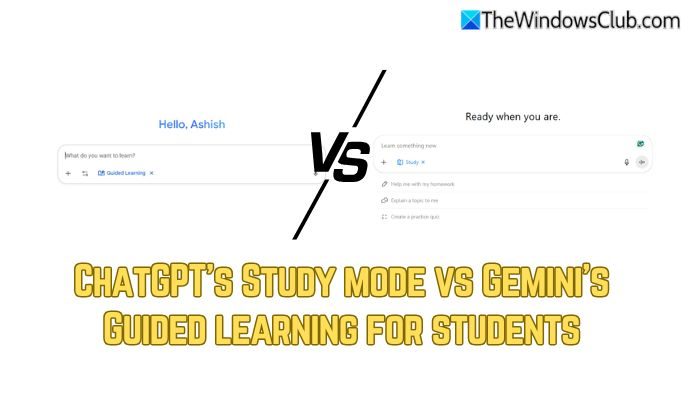
ChatGPT’s Study mode vs Gemini’s Guided Learning for students
1] Learning Philosophy
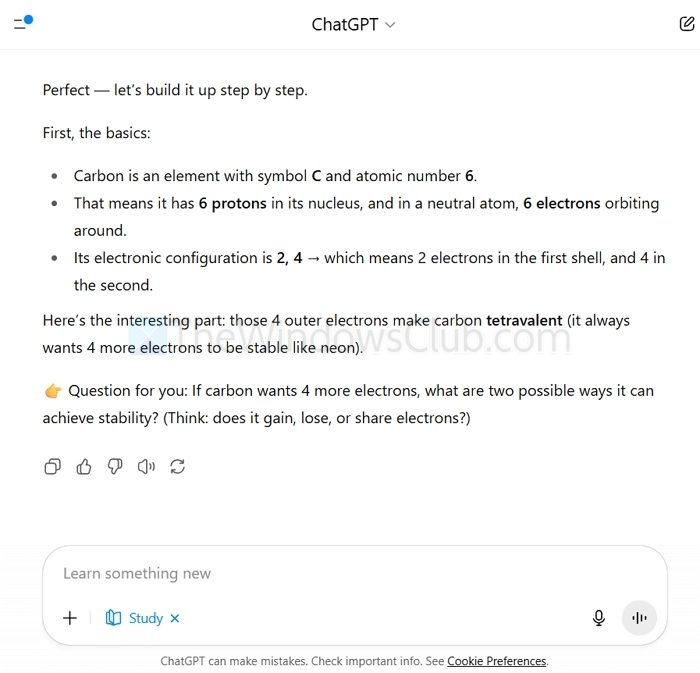
ChatGPT’s study mode is designed for active learning through Socratic questioning. In other words, the students will need to explore their subjects, reflect, reason, and find solutions independently. However, to ensure that the students are getting detailed info, ChatGPT gets inputs from 40 educational institutions that offer a deeper understanding.

To use the study mode, the student needs to be productive, meaning they will need to put their effort and reflect on what they truly want to learn.
On the other side, Guided Learning by Google Gemini focuses on conceptual insight through structured, interactive guidance. It doesn’t offer you direct answers like the study mode. You can consider Guided Learning as an intelligent tutor that will help you with structured learning.
Read: ChatGPT vs Copilot vs Gemini vs Claude
2] User Experience
ChatGPT’s study mode maintains its chat-based interface. So the answers to your questions, hints, and any other content will appear as a conversation flow that feels like one-on-one tutoring.
Also, it offers you the flexibility to toggle Study mode on or off mid-session. So you can quickly switch between learning and getting direct answers.
On the other side, Guided Learning embeds learning within the broader Gemini UI. It offers you visual layouts and prompts. Although it still maintains the same conversation-like learning elements, it integrates visual organization that allows you to track your learning process and access different types of content more efficiently.
It accommodates different learning materials like text explanations, multimedia content, etc.
3] Visuals and Multimedia
One of the key differences between the two platforms is their approach to visual and multimedia content. ChatGPT’s study mode remains text-based, and it offers information through text content generation.
However, OpenAI plans to change this approach and integrate clearer visualizations for complex or text-heavy concepts in future updates.
On the other side, Google’s Guided Learning excels in multimedia integration. It uses Google’s vast ecosystem of educational resources. It responds using images, diagrams, videos, and interactive quizzes to help users build and test their knowledge, rather than simply giving them the answer.
4] Quizzing and Assessment
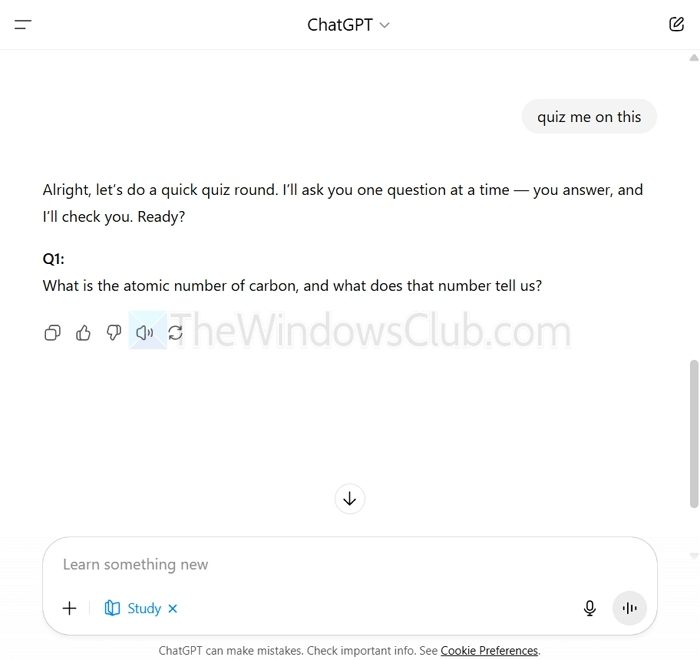
With both platforms, you get assessment features. But how they function is quite different from each other. ChatGPT’s study mode generates dynamic questions in real-time within the natural flow of conversation.
These assessments are part of the conversation, which feels more like a natural part of the learning conversation.
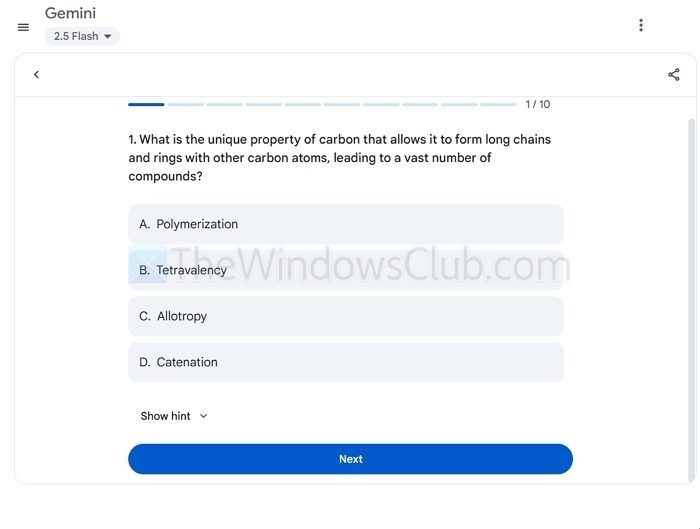
However, Google’s Guided Learning takes a more structured approach to assessment through formal, pre-built quizzes and testing components. Quizzes, flashcards, and study guides are available to users 18+ at this time.
The platform offers traditional educational tools like flashcards and structured quizzes that provide clear checkpoints for measuring learning progress.
5] Flexibility
ChatGPT’s study mode is quite flexible. It offers you a direct learning experience based on immediate interests and needs. You can change topics mid-conversation, ask follow-up questions, or dive deeper into specific areas without being constrained by predetermined lesson plans. This helps with self-learning and ensures that you get to learn something in depth.
On the other side, Google’s Guided Learning follows a more structured, curriculum-based approach that provides clear learning pathways from start to finish. While this may seem less flexible than ChatGPT’s open-ended approach, it offers valuable benefits for students who need organized study plans.
6] Best Use Cases
Now, which one should you really choose? Well, ChatGPT’s Study Mode works best for exploratory and curiosity-driven learning, allowing students to engage in flexible, conversation-based exploration that helps build unexpected connections between concepts.
It also works great when it comes to solving specific problems, guiding students through a Socratic, step-by-step approach that strengthens problem-solving skills. Plus, you can get a quick clarification or a deeper understanding of concepts.
On the other hand, Google’s Guided Learning is ideal for structured, goal-oriented study. It is an ideal solution for students who want to study for exams, as it offers a systematic approach along with progress tracking. So you can be certain that no topics are missed. Plus, it helps you to learn visually via its integration of diagrams, videos, and multimedia content.
Do share your experience, if any, when using these tools.
