
Data Science is not just about data. The bare basics are recognizing all data to keep and identifying how to process it for different results. It does not stop there. Data scientists need to figure out blanks in data and fill them with data that ‘may’ come up in the future. Data Science essentially is about connecting the dots in businesses and using existing and non-existing data to meet the demands of each business.
Data Science is one of the hottest areas in technology, and so is the demand for data scientists worldwide. A new online Microsoft Certification program called the Microsoft Professional Degree Program has also been announced.
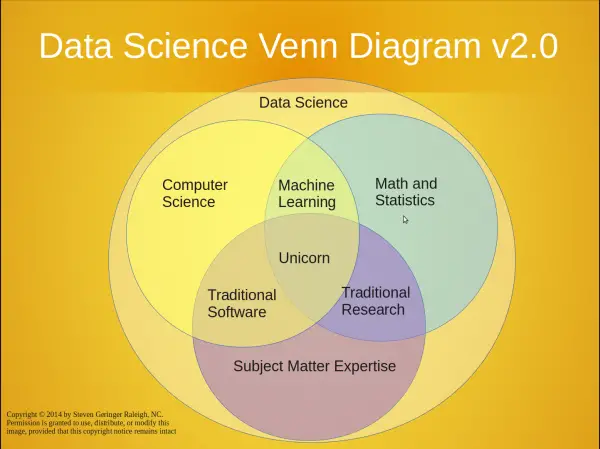
What is Data Science, and how do you become a Data Scientist?
Most of us think Data Science is simply statistics. If you are good at statistics, you will be able to represent the numbers in any way you want: charts, infographics, etc. Will you identify the different data needs for the business in other areas? Can you ‘foresee’ data? Will you be able to fill in the required data pieces that are not yet available? These questions don’t belong solely to statistics.
What is Data Science? Let’s examine it by listing each step to enhance the overall image. It’s difficult to explain in one sentence, but I’ll try. Data science lets you identify data for different purposes, identify business needs for information, and process the data using tools at hand to provide inputs necessary for a business to thrive.
Thus, Data Science is a bit of everything. It encompasses statistical skills, a few managerial skills, language processing, research skills, a basic understanding of machine learning, and a comprehensive understanding of the tools required to produce the desired results.
Data Science contains all of the following, irrespective of what all is used at a business:
- Creating the need for data
- Categorizing of data sets based on their possible usage
- Strategized storage of data sets on-premise or the cloud; in either case, the data sets should be available on-demand without delay.
- Understanding business process flows and how different data sets are helpful for each.
- Understanding of business decisions to help the business do better
- Ability to process data using a different set of tools: spreadsheets, databases, programming languages, etc. to meet the demands of business processes
- Ability to foresee what kind of data would be incoming shortly and use it for current processes
- Analyzing the results of a process and going back to the drawing board to make it better
The above list is not comprehensive but highlights the main points of data science. As the first point suggests, data scientists need to convince businesses that all the data is useful and should be stored for a long time. Maybe put on those useful old databases on some shared cloud for 10-15 years so that they can look at it and produce more effective databases? Any need may arise as the business environment continues to change. Laws of the land change, business processes vary, and data needs to be adapted accordingly. Thus, the more information you have at hand, the more effective you’ll be.
Traits of & Requirements to become a Data Scientist
In the third paragraph above, I tried to describe data science as an amalgamation of marketing, managerial, statistical, Machine Learning science. Statistical skills won’t be enough. You’ll need more than that.
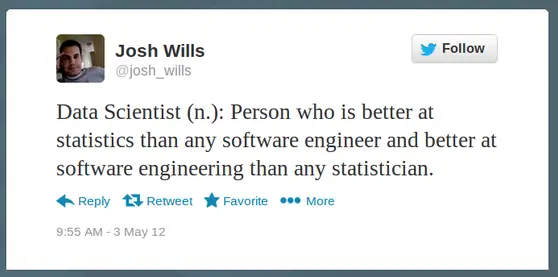
First of all, you’ll need Math skills. They’d be Calculus and Algebra in addition to simple arithmetic. Learn the metric system for calculations, as it provides precise results. You must be good at permutations and combinations. A certificate course in Math may cover all these. There are also online courses available on Coursera.
It would be helpful if you have experience or knowledge in team management. Likewise, certificates and diplomas in business management will give you an edge.
You’ll need to learn at least one data handling language. Python and R are always in demand from the adverts I have seen. R is a part of Hadoop, so if you have a certificate in Hadoop, your chances of being hired increase.
The requirements to become a data scientist will keep changing as more and more things are added to Data Science. For example, a bit of Machine Learning experience will go a long way in securing an excellent job, as everyone is focusing on AI.
The job descriptions of Data Scientists vary from business to business. At one place, they need analytics, while at another place, they’ll want data scientists working on artificial intelligence. Take a look at the list I’ve written to explain Data Science. The more points you can cover, the better it will be for you.
If you still have questions about data science or the requirements to become a Data Scientist, please leave comments. I’ll try to get answers for you.
Is data science a promising career?
Data Analysis will always be in demand, and if you are good at analysis, then yes, it can be a suitable career. Data analysis helps businesses predict how things could change if it will help the company grow. However, the best way to choose is to speak with someone already in this field and get an idea.
