
The importance of money in judging ownership of a person’s assets has been known since the late Stone Age. It started with stone nuggets, then iron tablets, gold and silver coins, and now paper money and electronic money. One notable fact is that over time, the amount of money people possessed increased while the value of each unit decreased. This continued until the banking system had to digitize its currency, which is now stored in reserve banks in digital form. One step ahead of the agenda is the concept of Cryptocurrencies. This differs from money stored in banks, which you can access indirectly through debit/credit cards and online banking.
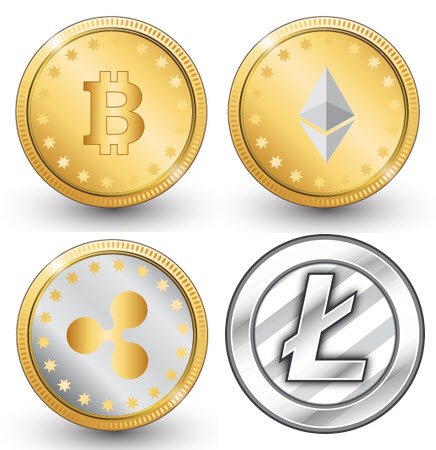
What is Cryptocurrency
Cryptocurrency is an online version of money, a digital asset to be precise. The name is derived from the Cryptography, which is used to encrypt transactions and control the production of the currency. It is a strictly monitored process, as it uses Blockchain Technology.
To put it very simply, Blockchain technology is a distributed database that is used to manage & maintain a growing list of data blocks, using a P2P network collectively. These data blocks may be situated in different locations and not connected to the same Processor. A database is a collection of records. A distributed database may be located in different locations and not attached to a common processor, but it may be in the same or different physical locations and spread across a computer network. In a Blockchain, once a piece of data is recorded, it cannot normally be edited or changed.
Though it was once neglected, banks, financial institutions, and companies are becoming increasingly aware of its importance. They fear losing their market of ‘digital cash‘ to the new currency.
While the security and ease of exchange make it an ideal medium of monetary exchange for the future, few people know about Cryptocurrencies, and many believe they are unsafe. Although a recent surge in Bitcoin’s price and its simultaneous promotion on social media generated a lot of interest, it could still be years before it enters the mainstream.
What is Cryptocurrency Mining
To mine cryptocurrencies, you need a combination of powerful hardware and software. Since a currency’s value depends on how many units are available in the market, the process must be carefully monitored and highly reliable. Cryptocurrency mining is simply the process of generating new units of Cryptocurrency.
To understand it better, let us assume a large national economy with trillions of dollars in all banks. Since it is not physically possible to store all these currency notes in banks, they are stored digitally with a central reserve bank. The reserve bank maintains a digital record of what it owes to which bank but doesn’t keep the notes in a physical form. Whenever it needs to push money into the system and is short of notes, it simply gets them printed.
Although the central bank can print as many notes as it wants, it doesn’t do so without reason. This is because when we print more currency and push more money into the market, it doesn’t make people rich; it simply devalues the existing currency and prompts inflation. The more units of a currency exist in a market, the more divided its value becomes.
The same happens with Cryptocurrency. Cryptocurrency mining is a carefully monitored process to ensure the value of existing units does not depreciate.
How is the price of a Cryptocurrency determined
While the market prices of various Cryptocurrencies vary widely, liquidity remains a common trait. Currently, cryptocurrency values fluctuate a lot.
The price of a Cryptocurrency, like almost every other product and service, depends on supply and demand. If more people demand a specific Cryptocurrency that is in short supply, its value increases. Then more units are mined to maintain the flow. Many, however, have chosen to restrict how much can be mined. For instance, the number of Bitcoins is currently restricted to a maximum of 21 million.
List of Cryptocurrencies
While the list of Cryptocurrencies is huge—as of today, there are over 800—we can only discuss the most prominent few here.
1] Bitcoin: Bitcoins are the most popular and the highest-rated Cryptocurrency. Rather most think of it as the only Cryptocurrency available in the market.
2] Ethereum: While still at its nascent stage, Ethereum launched in 2015 might be the Cryptocurrency of the future. It is decentralized, secure, and could be used to trade almost anything.
3] Litecoin: They say that if Bitcoin is gold, Litecoin is silver. Litecoin is based on the fundamentals of Bitcoin’s peer-to-peer system, but with technical improvements. It has substantially reduced transfer times compared to BTC.
4] Ripple: Ripple’s distributed financial technology allows for banks around the world to directly transact with each other.
5] Dash: Dash, or DarkCoin, as they call it, is a highly secretive Cryptocurrency. It is almost impossible for anyone to trace where it has been routed. It is more in use on the Darknet.
Read: Bitcoin vs. Litecoin vs. Dogecoin – Cryptocurrency compared.
Risks with Cryptocurrencies
With most transactions shifting online, Cryptocurrencies have become a cause for concern for Banks, as they fear the money-transaction business will move online. They will try to stop it at this level. Recently, the U.S. Congress submitted a bill to make Cryptocurrencies illegal. The pretext was that they could fund terrorism and corruption.
But in our opinion, Cryptocurrency is here to stay – and if one invests conservatively and carefully in them, one could end up making money!
