
In this post, we will show you how to export text from a profile in Windows Terminal on a Windows 11/10 computer. The Export Text feature wasn’t available in earlier stable releases, but you can use it now. Whether you use Windows Terminal with Command Prompt profile, Azure Cloud Shell, Windows PowerShell, or some other profile, you will be able to export all the text as it is. The output will include everything from the introduction or starting text to all the commands you execute and the command results.
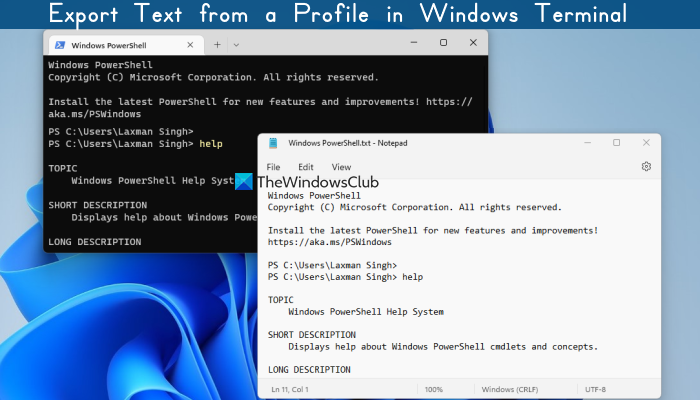
This feature lets you store or save the text from a Windows Terminal profile as a TXT file which is better than the traditional copy and paste process. There are so many Windows Terminal tips and tricks already available, now Export Text is also a part of it that makes Windows Terminal even better and more useful. Let’s look at how to use this feature.
Export Text from a Profile in Windows Terminal
There are three ways to export all the text from a Windows Terminal profile. These are:
- Right-click option
- Using Command Palette
- Using a hotkey.
1] Export Text from a Profile in Windows Terminal using right-click option
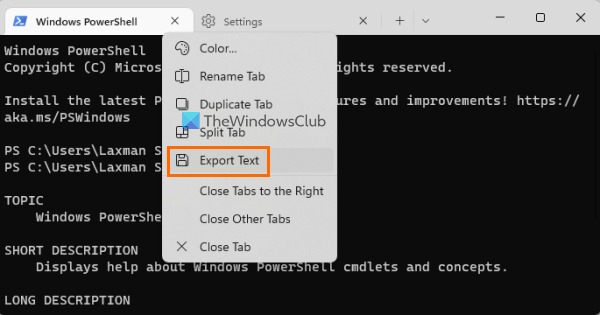
The steps are as follows:
- Open Windows Terminal from the Start menu of Windows 11/10, Search box, or any other way
- Open a profile and start your work
- Right-click on the profile tab
- Select the Export Text option
- In Save As window, select a destination folder. You can keep the default file name or add a file name of your choice
- Press the Save button.
2] Export Text from Windows Terminal Profile using Command Palette
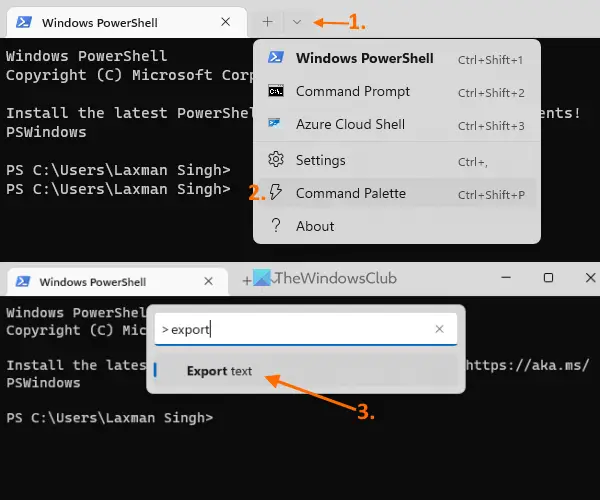
Command Palette feature helps to access and use various actions that can be performed within Windows Terminal. Export Text is one of those actions. Here are the steps:
- Open Windows Terminal
- Open a Command Prompt profile or any other profile
- Click on the drop-down icon that is present next to the Open a new tab icon
- Click on the Command Palette option. Alternatively, you can also press Ctrl+Shift+P hotkey to launch Command Palette
- Type export text in the text box of the Command Palette
- Press the Enter key
- A Save As window will open using which you can save profile text as a TXT file to any folder on your Windows 11/10 computer.
Related: How to add a New Profile in Windows Terminal.
3] Export Text from a Profile in Windows Terminal using a hotkey
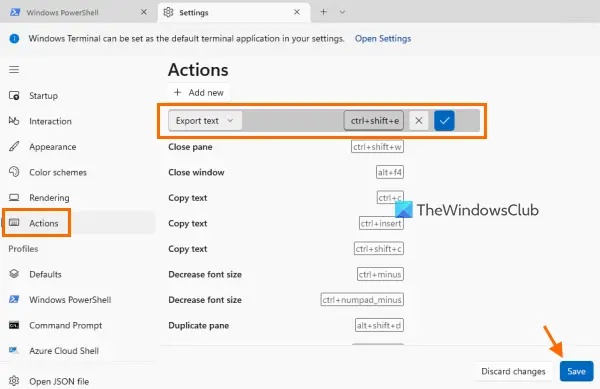
This is the easiest way to save all the text from a profile in Windows Terminal. But before using this option, you first need to set a hotkey for the Export Text feature. For this, follow these steps:
- Type windows terminal in the Search box of Windows 11/10
- Press the Enter key to open the Windows Terminal application
- Use Ctrl+, hotkey to open Windows Terminal Settings
- Access the Actions section from the left section
- Click on the Add new button
- Use the drop-down menu to open the list of available actions
- Select the Export text action
- Click on the text box available for Export text action
- Set a key combination like Ctrl+Shift+E or something else
- Click on the Blue tick button (accept button)
- Click on the Save button available in the bottom right section.
Now, whenever you press the assigned hotkey while working in a Windows Terminal profile, you can export all the text.
Hope this helps.
How do I copy text from a Terminal window?
You can select the text available on a Windows Terminal profile and use the Ctrl+C hotkey to copy the selected text. But there is a better option/feature that lets you save all the text from a profile in Windows Terminal as a TXT file. That feature is Export Text. The post above shows how you can export text from a Windows Terminal profile using this feature.
Read: How to customize and configure Windows Terminal settings
How do you edit a profile in Windows Terminal?
If you want to use options to set a name for a profile, hide the profile from the dropdown menu, turn on retro terminal effects, change cursor shape for the Windows Terminal profile, set the background image, and more, then it can be done using the following steps:
- Use Ctrl+, hotkey to open Windows Terminal Settings
- Under the Profiles section on the left, select the profile you want to configure.
You will now see the list of available options you can set to your needs.
Read next: How to enable Transparent Background in Windows Terminal.
