
With reports of many Google Chrome add-ons turning malicious, you are never really sure which extension is carrying what into your Windows PC. It could be that you still don’t know the recently installed extension has been flagged as adware and might trouble your PC sooner or later. So what would you do to avoid becoming a victim here?
How to detect malicious Chrome extensions
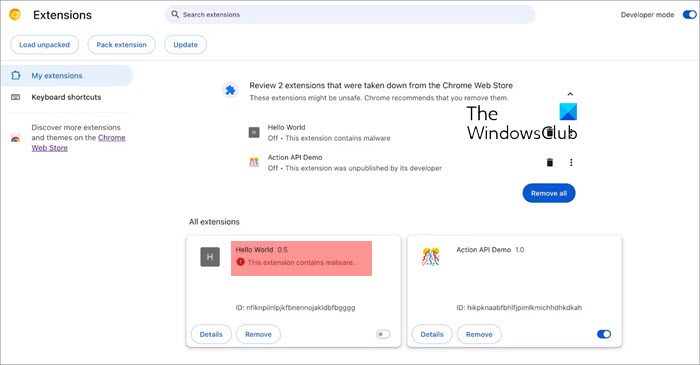
While almost all the extensions that you download from the official Chrome Store are vetted and safe, it may happen that a rogue one may slip through. It could also happen that the extension could go rogue after some update – especially if it has been bought over by someone else. While Google Chrome may warn you if the installed extension is malicious, here are some other suggestions to help you.
- If an extension asks for broad access to all your data for a simple function, it should be a red flag.
- If there are few or poor Reviews, Comments & Ratings, you should take a considered decision.
- Never install extensions from 3rd party-websites. Only download from the Chrome Web Store, look for the established publisher badge, and check the developer’s reputation.
- Chrome Extension Shield Pro is a Chrome extension that alerts you when you are running one of the Chrome add-ons identified as malware, spyware, or adware.
- If you see pop-ups or notifications after installing an extension, it could be malicious.
- If your homepage or search engine is changed, it could be due to a rogue change.
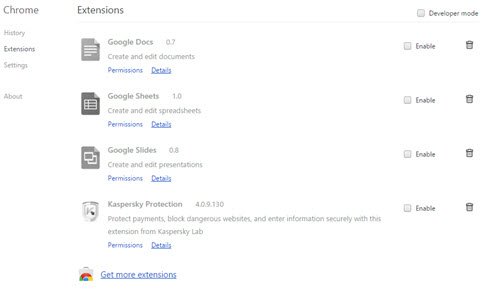
If you find an extension flagged as a virus or malicious, we recommend that you remove the browser extension right away and run an AdwCleaner scan.
Rogue or malicious browser extensions can steal passwords, credit card information, or browsing history, leading to identity fraud. So it is always good to take a look at your browser extensions from time to time and keep both the browser and the extensions updated.
How to check if a Chrome extension is malicious?
To check if a Chrome extension is malicious, review its permissions; excessive or unrelated permissions may indicate a threat. Consider the source; extensions from unknown or unreliable publishers can be risky. Ensure you download only from trusted platforms, such as the Chrome Web Store, to minimize exposure to harmful extensions.
How to find suspicious extensions?
To find suspicious extensions in Google Chrome, click the three dots in the top right, go to “More tools” and select “Extensions.” Review the list for any unfamiliar extensions and click “Remove” to delete them. Regularly checking and managing extensions helps maintain browser security and performance. You should also run your antivirus scan.
