
One or more of these technologies might already be interfering with your business process flow, giving you a tough time. Digital Disruption is an innovation that creates obstacles in continuing your business the old way. You have to check for possible digital disruptions and be ready for them before they eat into your profits. The article lists the top 5 digital disruptions & technologies that have already started to affect businesses. While you are at it, do check out the link towards the end of the article for an assessment of your business readiness for digital disruptions.
What are Disruptive Technologies
Technology is called disruptive when it changes the way industries and consumers operate. It can be beneficial for businesses as it can increase their customer base. On the other hand, it can be bad too as it can cause job loss.
We have explained some disruptive technologies below.
Cloud Computing
Anything off-premises and always accessible from anywhere in the world is the simplest definition of cloud. The early adaptions of cloud computing are email and messaging. In the case of email, it is not just a disruption but a disruptive technology that changed the way people interact. Emails removed snail mail (handwritten letters) from the scene of business communication. That is a different story so I won’t delve into it in this article.
Going by the above definition, cloud computing is anything off-premises. Generally, there are cloud service providers who provide all types of services – backup, storage, software development, business communications – including websites and customized email IDs, data processing, and more. All this has affected the businesses that serviced their clients on-site. The cloud is much mature, bigger, and cheaper than these individual entities providing on-site services. While most businesses providing on-site storage, backup, etc., have gone out of business, others have evolved into clouds themselves to keep up with the disruption in cloud computing.
Same way, programmers and game developers need not arrange all equipment related to software development, testing, and distribution. The cloud, like Azure, provides the perfect platform for software development, testing, and distribution. Service providers in this area – who were providing assisting technologies for software development and distribution – had to change their approach to survive in the business sector.
Another example is Google Apps digital disruption to hosting service providers. With Google offering cloud solutions for business communication, hosting service providers are suffering as the majority of businesses have moved to these cloud-based offerings for their ease of use and accessibility. Google Apps for Business not only offers to host but makes it easy for non-IT admins to maintain email IDs, communications and collaborations, etc. at a cheaper price.
There are endless possibilities with cloud computing with some of the other startups providing something new frequently, the shape of the IT industry has already changed and will keep on changing. You will have to check out what are the possibilities, how they can affect you, and accordingly, prepare to counter the disruption. You can also make use of cloud services and become a disruptor instead.
Mobile Computing
This is related to smartphones and mobile computing devices that made BYOD (Bring Your Own Device) possible. Employees prefer companies that allow a single device for both office and personal use – as long as data is not in danger.
Not only BYOD but mobile computing has also changed the way people work. With mobile computing as a disruptor, employees can work from anywhere – without having to drive to the office every day. Many companies provide the facility of telecommuting, thereby saving the time otherwise spent wading through the traffic to reach the office.
With the power these mobile computing devices will have by 2025, it is expected that most business processes will soon become mobile apps that can be used anywhere. Already many businesses have gone mobile-only. For example, Snapdeal was an e-commerce website doing well. But when its competitors started going mobile-only, it too had to change its operating methods.
The focus is on businesses providing mobile access to their customers to increase profits. There is no more need to visit a brick-and-mortar store or to boot up a computer. You can use your smartphone app to buy things and services.
We cannot leave out Internet access when talking about mobile computing. It is necessary for mobile computing, for connecting to a business or to connect to your office via VPN remotely. By 2025, more than 3 billion people are expected to have access to mobile computing. That may largely change the way businesses are conducted these days. The Snapdeal example could be a beginning. If you have a brick-and-mortar store, you will also need an eCommerce website and/or a mobile app that people prefer to your in-store experience.
Machine Learning and Automation
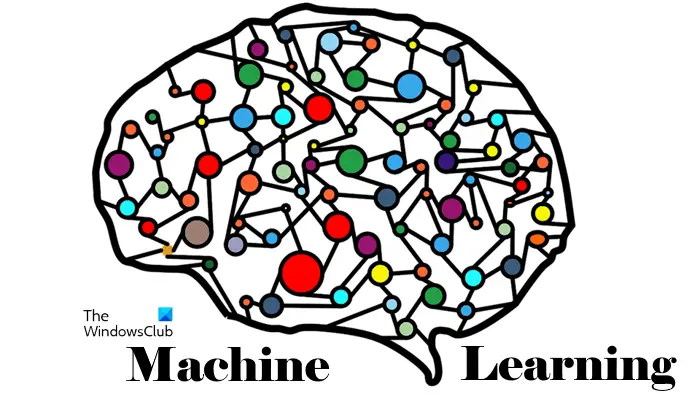
As computers become smarter, we might soon see a significant drop in manual operators. It is assumed that Machine Learning may replace some 140 million full-time workers by 2025 in critical decision-making processes. If your business is related to consultancy, for example, you may have to adapt to machine learning packages so you are not left behind in the coming few years. There are many other possibilities that I am not able to think of, at the moment. Check out how Machine Learning and AI can affect your business by assessing what all it does and how it can be a disruption to your business. Then formulate a plan to counter or adapt it to your business.
Big Data
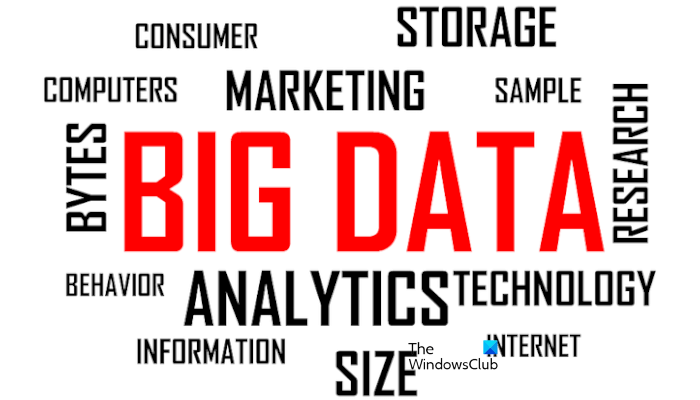
Big Data is another thing that can prove to be a disruption to businesses in the field of not only Analytics and Consultation but also many others. With the amount of data being stored on and off-premises, the methods of collecting and sorting data, and the methods of processing data to achieve results quickly, the process of decision-making will change significantly.
Combined with cloud computing and machine learning, Big Data can be a huge blow to many sectors including but not limited to small-scale storage providers, business consultancies, and analytics.
Internet of Things (IoT as disruption)
Internet Of Things needs no introduction. While some countries are yet to adopt this technology that allows you to control devices remotely, many countries and societies are already learning to harness the power of IoT.
The simple thing it provides is remote monitoring and control of the device. In the process, it provides gazillions of data that can be stored to study the general practices of users and to provide better, interactive devices. A smart light bulb is any day better than a regular light bulb. The smart light bulb can not only operate on its own or by remote apps, it can also collect data that you can use to figure out and reduce your electricity usage. It is just one example. Imagine IoT technology coming to the kind of things your business is engaged in. Would it not be better for you to start working on smart devices rather than waiting until another company gives you a jolt?
A recent example of disruptive technology is the commercial availability of brain-computer interfaces (BCIs), which allow people to control devices directly with their thoughts.
The above are the top technologies that I see as digital disruptions to any business – irrespective of the markets they engage. There may be several more – like new energy storage devices that store energy for later use, 3D printing and the design of material with superior characteristics are some of the other disruptive technologies. Think of these disruptions and how they can affect your business in the future. Plan accordingly so that you are not left behind when the time comes.
Is Zoom a disruptive technology?
Disruptive technology can be both good and bad. If we talk about Zoom, it has brought an affordable, reliable, and user-friendly solution for video conferencing. Hence, it has disrupted the video conferencing industry.
Is Facebook disruptive?
Yes, Facebook is also considered a disruptive technology. This is because it has disrupted communication. Today, you can use Facebook to promote your business. By doing this, you can reach your consumers easily. Also, it helps businesses expand their customer base. Hence, it has disrupted businesses.
Read next: What is Web3 technology used for?
