
Social Media is an immensely powerful tool today. With a click of a button, it makes it possible for any individual to contact, reach, and share information with thousands and even millions of people in the world – Well, this is something that was nearly impossible a few years ago. Social media can benefit individuals, companies, the government, and charities by enabling the sharing of information and the dissemination of messages to large audiences. However, setting this benefit aside, social media, like any other tool, is used for both good and evil.
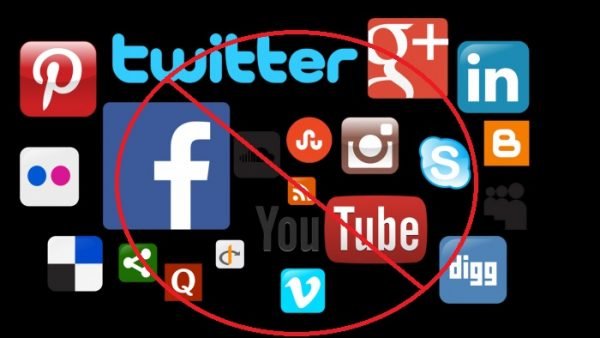
Several parties are leveraging this tool to advance an agenda, spread propaganda, and disseminate misinformation. No wonder, even in this age of instant information, the usage of Social Media isn’t boundless for all. The gloomy truth is that several countries around the globe seek to limit external influences; they block internet connections and censor content whenever and wherever possible. This article examines the top countries that have banned Social Media websites.
Countries that have banned social media
1] North Korea
Number 1 on the list of countries that have banned Social Media and perhaps the most tarnished exponent of internet censorship. You may be surprised to learn that they have access to fewer than 30 websites available within the country. No wonder their censorship is ranked as one of the most extreme in the world. The government officially banned Facebook, YouTube, and X (Twitter) in 2016 to underscore its concern about the spread of online information. Most of the country’s internet use is restricted to military personnel and the government. A very limited number of the country’s citizens have access to the internet and can view only the government-sanctioned intranet.
2] Eritrea
Eritrea is Africa’s most secretive state. In recent years, it has attracted considerable attention from journalists; why? The country’s president imprisoned closely 2 dozen people without charge in 2014. Access to information nationwide is also hindered by a ban on mobile Wi-Fi, which means citizens are allowed to access the internet only via slow dial-up modems, accounting for the very low access rate of just 1%.
3] China
Internet censorship in China is among the most extensive in the world, making it one of the top countries that have banned Social Media. This is due to the wide variety of legal and administrative regulations. Even though access to the Internet is broad, and an active social media industry is present, the country block IPs, filters searches and even erases content or reroutes queries for restricted content to pro-China information. This barrier is often referred to as “The Great Firewall of China”. Over the past decade, China has blocked Google, Facebook, Twitter, and Instagram, as well as thousands of other overseas websites, including The New York Times and Chinese Wikipedia.
4] Saudi Arabia
Several books, magazines, newspapers, films, content, and television programs published on the Internet are highly censored in Saudi Arabia – the reason is religious beliefs. No. 4 on the list of countries that have banned Social Media, this country has banned nearly half a million websites that contain content countering Islamic beliefs, including political, social, and religious content. All internet traffic into Saudi Arabia passes through a router strictly monitored and controlled by the Ministry of the Interior (i.e. a department of the Saudi Arabian government responsible for maintaining a list of previously blocked websites). The government blocked access to Wikipedia and Google Translate, which were used to circumvent the filters on the blocked sites by translating their content. YouTube isn’t blocked, but the government has plans to regulate local companies that produce content for this platform. Social media platforms like Twitter and Facebook are widely used in the country.
5] Iran
Several social media tools and several products which encrypt internet conversations — have been unavailable in Iran for quite long now. As of 2013, nearly 50 percent of the top 500 visited websites worldwide were blocked, including YouTube, Facebook, Twitter, and Google Plus, making Iran one of the countries that have banned Social Media. In 2009, Iran became the world’s leading jailer of journalists and has ranked amongst the world’s worst jailers of the press every year since then.
6] Bangladesh
It is somewhat surprising that Bangladesh is listed among the countries that have banned Social Media. Bangladesh’s social media prohibition extends beyond Facebook. In 2015, the government temporarily blocked Facebook and other social media, for a period of 22 days following it’s Supreme Court’s decision to defend the death sentence of 2 men convicted of war crimes. Bangladeshi telecommunication authorities dispensed a ban on more than 18,000 websites which supposedly contained pornography or “obscene” content, this included Somewherein.net, the internet’s largest Bengali language-based blogging platform, and Google Books. Mustafa Jabbar, Posts and Telecommunications Minister describes these efforts as a “war” against pornography.
7] Syria
The situation on the ground in Syria is far from being stable, with warlike probabilities; restrictions on Internet use in the country are likely to endure. It is no wonder to see Syria’s name in the list of countries that have banned Social Media. Syria actively bans websites for political reasons and arrests the public accessing them. Websites that cover politics, minorities, human rights, foreign affairs, and other sensitive topics are completely banned in Syria. Social media, messaging sites, and video-sharing platforms all exhibit poor reliability and are regularly monitored.
8] Tunisia
Prior to the Tunisian Revolution, Internet censorship in Tunisia was widespread. Following the ouster of President Zine El Abidine Ben Ali, Internet censorship in the country declined significantly. Tunisia isn’t prohibitive in terms of preventing its citizens from viewing “subversive” content, but is increasingly interested in preventing bloggers from uploading content. Access to the Web is limited to 40% of the population. Furthermore, Internet providers should report all the bloggers (including their names, personal info, and addresses) to the government.
9] Vietnam
Vietnam’s communist party permits its citizens to access common websites such as Google, Yahoo, and Microsoft’s MSN if those sites disclose the names of all bloggers using their services. Moreover, they block any websites critical of the Vietnamese government, expatriate political parties, and international human rights organizations; basically, any site that advocates for human rights, freedom, and democracy. In 2016, the Vietnamese government blocked access to Facebook for its citizens during President Barack Obama’s visit to the country. According to Reuters, the country desired to quiet human rights activists.
10] Myanmar
Myanmar, formerly known as Burma, also aggressively blocks websites that criticize the government or expose human rights violations. As one of the countries that have banned Social Media, Myanmar also filters email messages, social media, and other web-based communications to suppress rebel activity in the country. Internet cafes must retain user records and make them available to the police upon request.
11] Turkmenistan
Facebook, Twitter, WhatsApp, and YouTube are banned due to concerns about propaganda.
12] India
India has banned TikTok, along with 58 other mobile apps, citing “activities…prejudicial to sovereignty and integrity of India, defense of India, security of the state and public order.”
This list is not exhaustive; other countries where bans on social media (Facebook, Twitter, YouTube) have been common include Cuba, Egypt, Mauritius, Pakistan, Ethiopia, Uganda, and Algeria.
The motivations for censorship can range from well-intentioned measures to protect children from unsuitable content, authoritarian measures to control a nation’s access to information, and, yes, political ones.
Why did India ban TikTok?
India banned 59 Chinese apps, including TikTok. According to the Ministry of Electronics and Information Technology, these Chinese apps were a threat to the data security and privacy of Indians. Following a ban in India, TikTok and other Chinese apps were also removed from the Google Play Store and App Store to prevent installation on smartphones.
Can I use a VPN for TikTok?
There is no definitive answer to this question. TikTok was banned in India because it posed a security threat to the national security and privacy of the citizens of India. Because the ban is at the national level, you may not be able to use TikTok even after connecting to a VPN. Many users tried installing TikTok by using a VPN but to no avail.
If you know of any countries that have blocked social media, do share in the comments below.
Read next: List of countries that have officially banned the use of VPN.
